


The most impressive AI video test is not always evidence of a dependable production partner. A single striking shot can be generated by many teams. A campaign-ready film has to hold together across shots, formats, feedback rounds and delivery requirements.
Choosing an AI video production company therefore requires a different evaluation from choosing a software tool or a freelance image maker. The question is not simply whether the team can generate beautiful frames. It is whether they can direct a controlled production from brief to final master.
Start with the work behind the reel
Ask to see sequences, not only isolated hero shots. Look for the same character, product, environment and lighting logic across a cut.
Useful evidence includes:
- boards and reference frames;
- approved stills beside final motion;
- examples of product geometry and packaging held across angles;
- continuity across wardrobe, props and environments;
- finished sound, edit, compositing and typography;
- multiple aspect ratios from the same campaign.
A polished montage can hide inconsistency. A complete sequence reveals whether the team understands filmmaking.
Ask how the team controls consistency
Consistency does not happen because a prompt is detailed. It comes from a repeatable system of identity references, product locks, wardrobe rules, shot planning and review.
A capable partner should be able to explain:
- how a character or product is approved before scale generation;
- which attributes are treated as non-negotiable;
- how camera, lens, lighting and palette are documented;
- how rejected frames are prevented from becoming motion work;
- how continuity is checked across the edit.
If the answer is only “we keep prompting until it works,” the schedule and budget remain exposed to chance. See How to Keep AI Characters, Products and Environments Consistent for the controls that matter.
Evaluate the approval process
AI can generate options quickly, which makes approval discipline more important, not less.
Look for a process that separates decisions. The team should lock the concept and references, then the visual world, then the hero stills, then motion. Approving all of those at once creates noisy feedback and expensive rework.
Ask what you will approve at each stage and what happens when feedback changes an earlier decision. A clear answer indicates production accountability.
Cinenamon uses a stills-first workflow because motion should begin only after the frame has earned approval. The reasoning is explained in Why AI Video Production Should Start With Approved Stills.
Test product accuracy
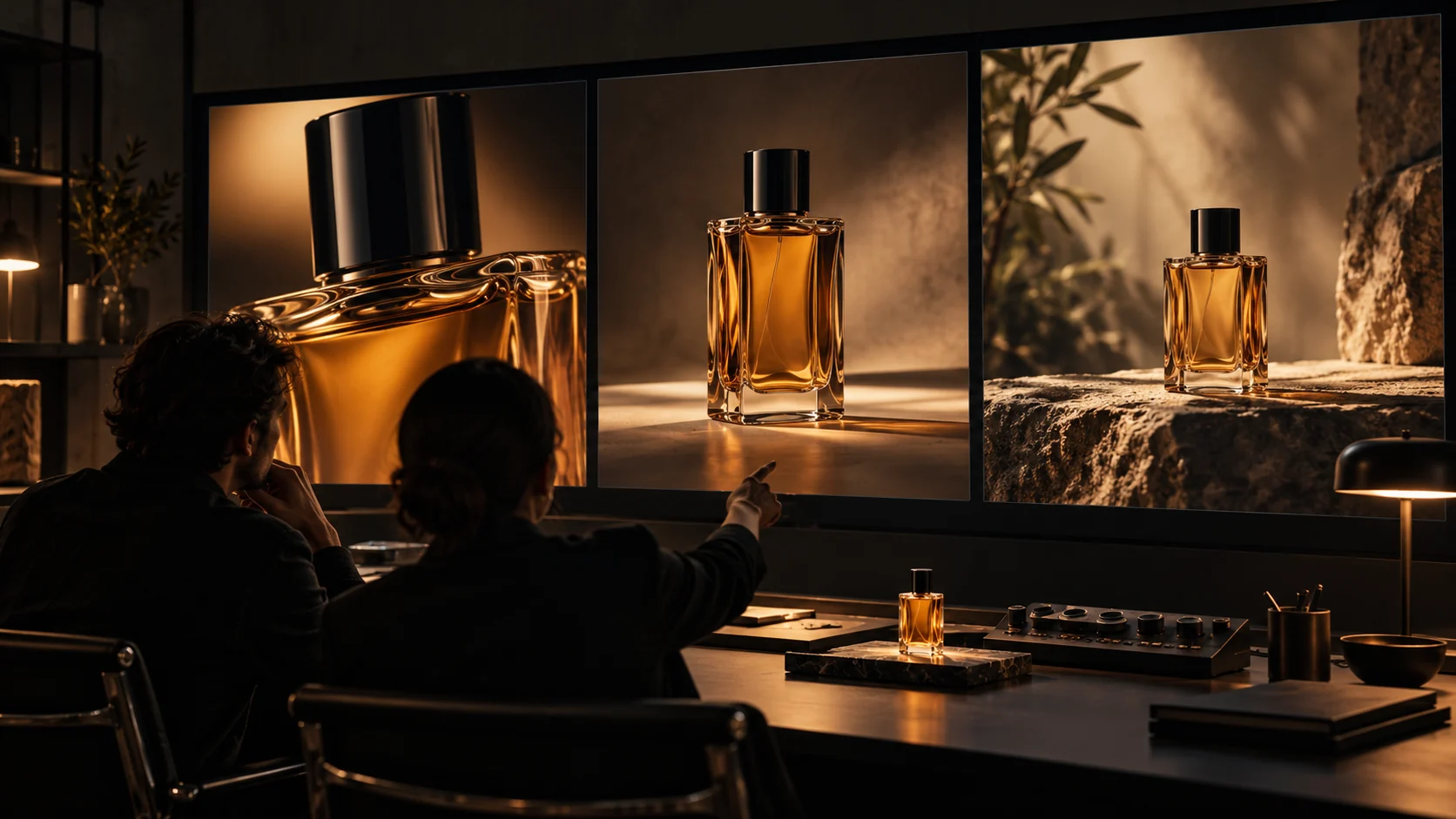
For product films, show the company a difficult reference before awarding the project. Choose an angle with readable typography, distinctive geometry, transparent materials or reflective surfaces.
Ask how the team would preserve:
- silhouette and proportions;
- label layout and spelling;
- cap, closure or hardware details;
- material response and reflections;
- approved colours;
- required disclaimers or legal copy.
The right answer may combine AI, photography, 3D, compositing and retouching. A mature team chooses the technique that protects the product instead of forcing every shot through one model.
Understand who directs the work
An AI production company may use a network of specialists. That can be an advantage if one creative lead owns the film.
Clarify who is responsible for the script, visual direction, continuity, edit, sound and client communication. Ask whether feedback goes to one accountable producer or to individual artists.
Scale without direction creates variation. Direction turns multiple specialists into one production.
Review rights and source policy
Commercial work needs a documented approach to assets and rights. Ask how the company handles:
- client-supplied brand and product materials;
- licensed music, voice and stock;
- generated people and recognizable likenesses;
- confidential references;
- model and tool terms relevant to commercial use;
- archive and deletion policies after delivery.
The company should be able to explain its process without making absolute legal promises. If your campaign has specific regulatory or territory requirements, involve your legal team early.
Look beyond generation to finishing
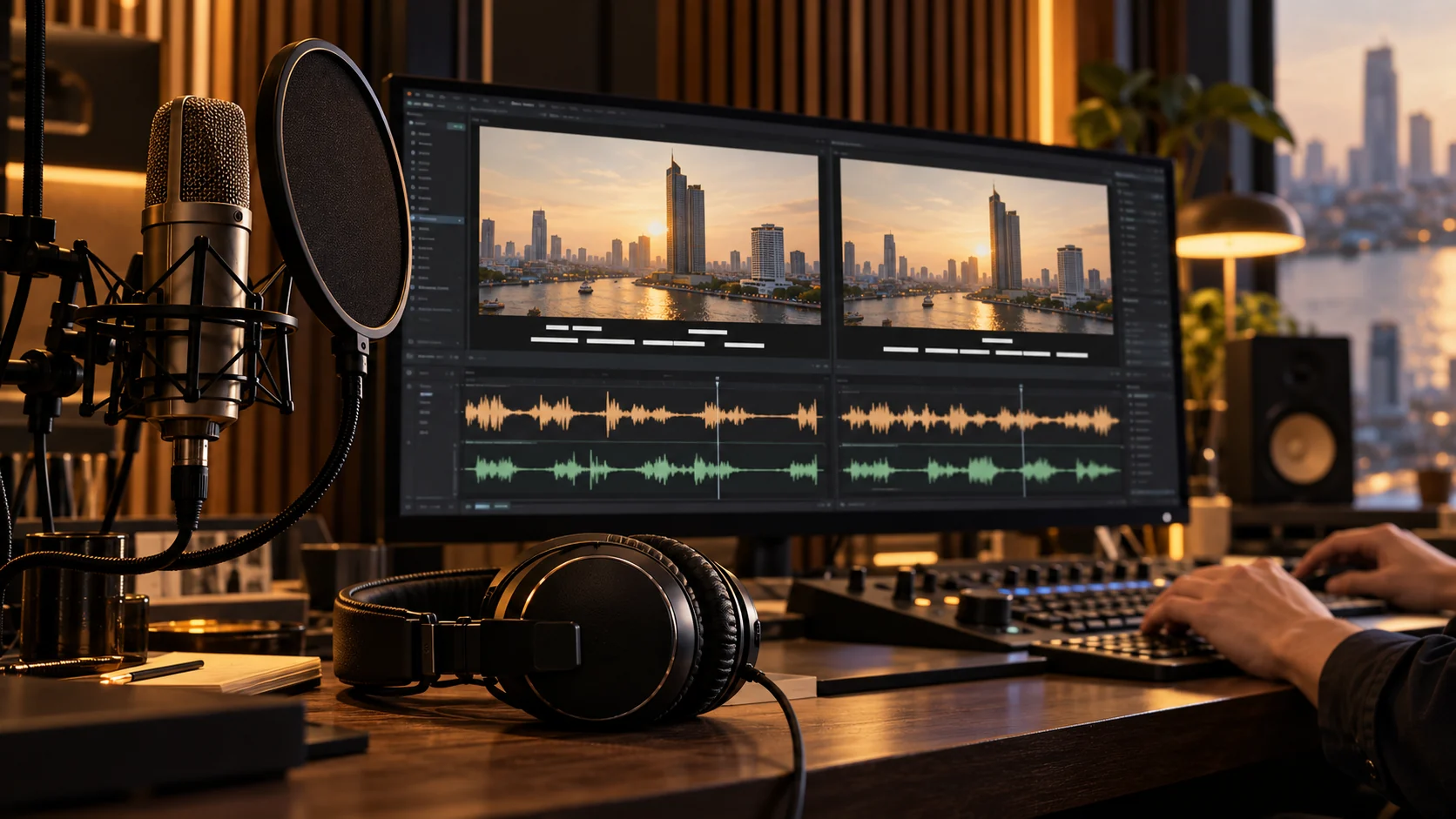
AI footage is raw material. A finished film still needs edit rhythm, compositing, retouching, colour, sound design, music, titles, captions and delivery quality control.
Ask who performs these tasks and request a final master, not only a social upload. Check motion edges, typography, sound levels and the stability of fine product details.
The finishing stage is where separate generated shots become a coherent brand film.
Compare proposals on the same scope
Quotes are difficult to compare when suppliers assume different deliverables. Give each company the same information: objective, audience, duration, estimated shot count, product requirements, aspect ratios, language versions and approval stages.
Then compare:
- what is included in pre-production;
- the number and purpose of review rounds;
- how product and character locks are created;
- whether sound and finishing are included;
- ownership and licensing terms;
- what counts as a change in scope;
- what masters and source materials are delivered.
Price becomes meaningful only when the production system and output are visible.
Red flags to notice
Be cautious when a supplier:
- guarantees perfect output before reviewing the brief;
- cannot show multi-shot continuity;
- starts motion before visual approval;
- treats product errors as minor details;
- has no clear decision owner;
- avoids questions about rights or confidentiality;
- proposes one widescreen master for every platform;
- describes tools in detail but cannot explain the story.
Choose the system, not the novelty
AI production will continue to change. A partner built around one model may struggle when the project needs another technique. A partner built around direction, visual controls and production judgment can adapt.
The useful test is simple: can this team turn your brief into an approval path, show you what “correct” looks like before motion and remain accountable through final delivery?
Explore Cinenamon’s AI and hybrid production approach or send a brief to discuss the method that best protects the idea.