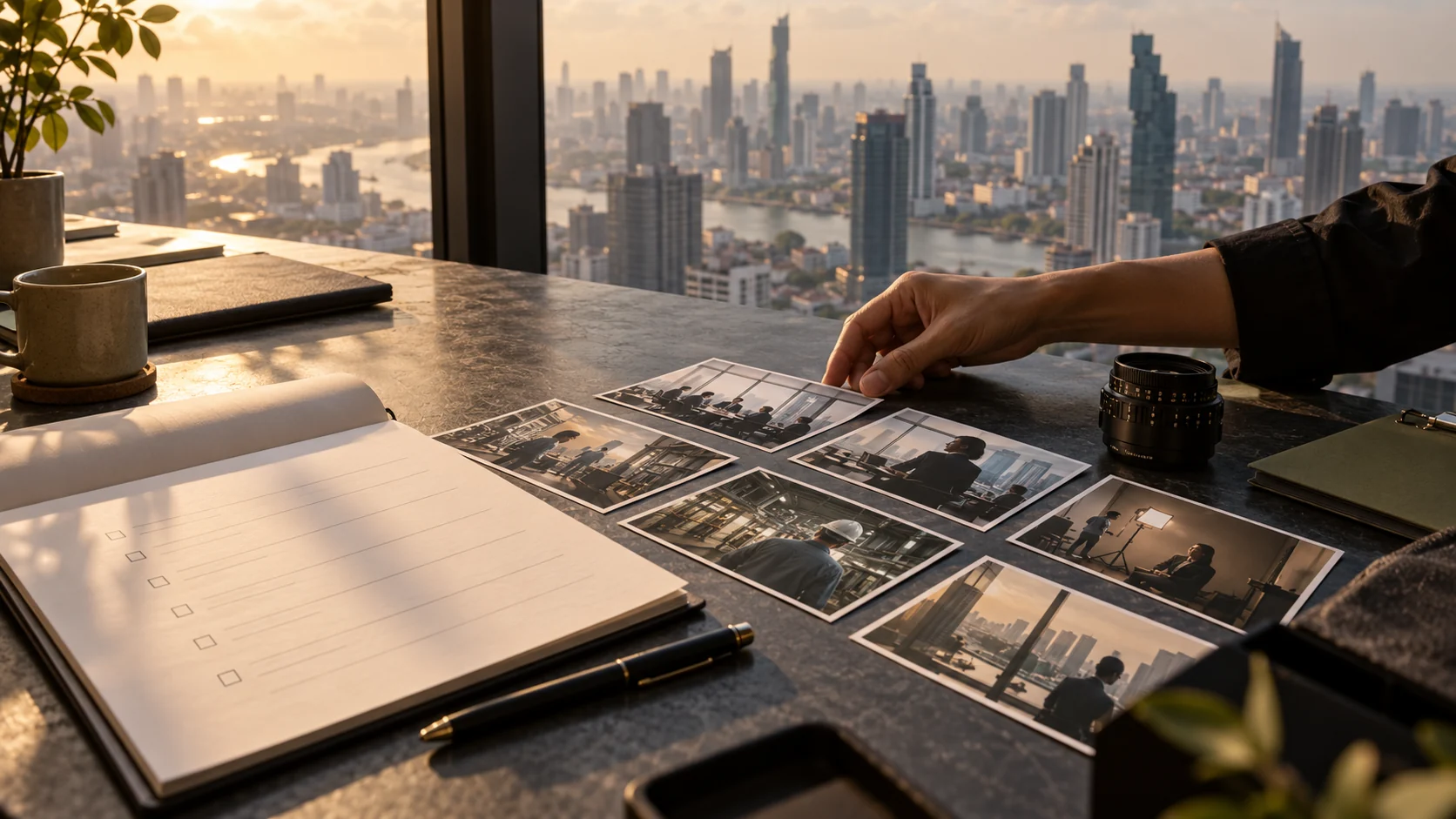

A hybrid corporate film combines live-action footage with AI-generated or AI-assisted imagery. It can show real leaders, employees, facilities and products while extending the story into environments or moments that would be difficult to film.
The format is useful, but only when both sides are planned as one film. If AI is added after the shoot to fill missing coverage, visual continuity and approvals become harder. The strongest hybrid work decides early what must be real, what should be designed and how the transition between them will feel intentional.
Begin with truth and imagination
Divide the story into two columns.
The first contains elements that gain value from being real: executive interviews, employees at work, a factory process, a laboratory, a location, an event or a product interaction.
The second contains elements that gain value from visualization: future infrastructure, an invisible system, a microscopic process, a journey across time, an inaccessible environment or a visual metaphor.
This is not a technical decision alone. It is a trust decision. Audiences should understand which moments document reality and which moments express an idea.
Write one visual grammar
Live-action and generated footage often fail to connect because they are designed with different assumptions. Create one visual grammar that covers both:
- aspect ratio and framing;
- camera movement;
- lens character and depth of field;
- lighting direction and contrast;
- colour palette;
- texture and grain;
- pace and transition style;
- typography and graphic behaviour.
The AI team can then build toward the photographed world, while the live-action crew captures plates and performances that leave space for extension.
Storyboard the transitions
Do not mark AI scenes with a generic note such as “add futuristic visuals.” Storyboard the exact transition.
A camera may push through a real product into a designed internal world. A real factory movement may match-cut into a future facility. An employee gesture may motivate a graphic or generated environment.
Transitions are where hybrid production either feels cinematic or feels assembled. Approve them in boards or animatics before filming.
Build an on-set capture list for post
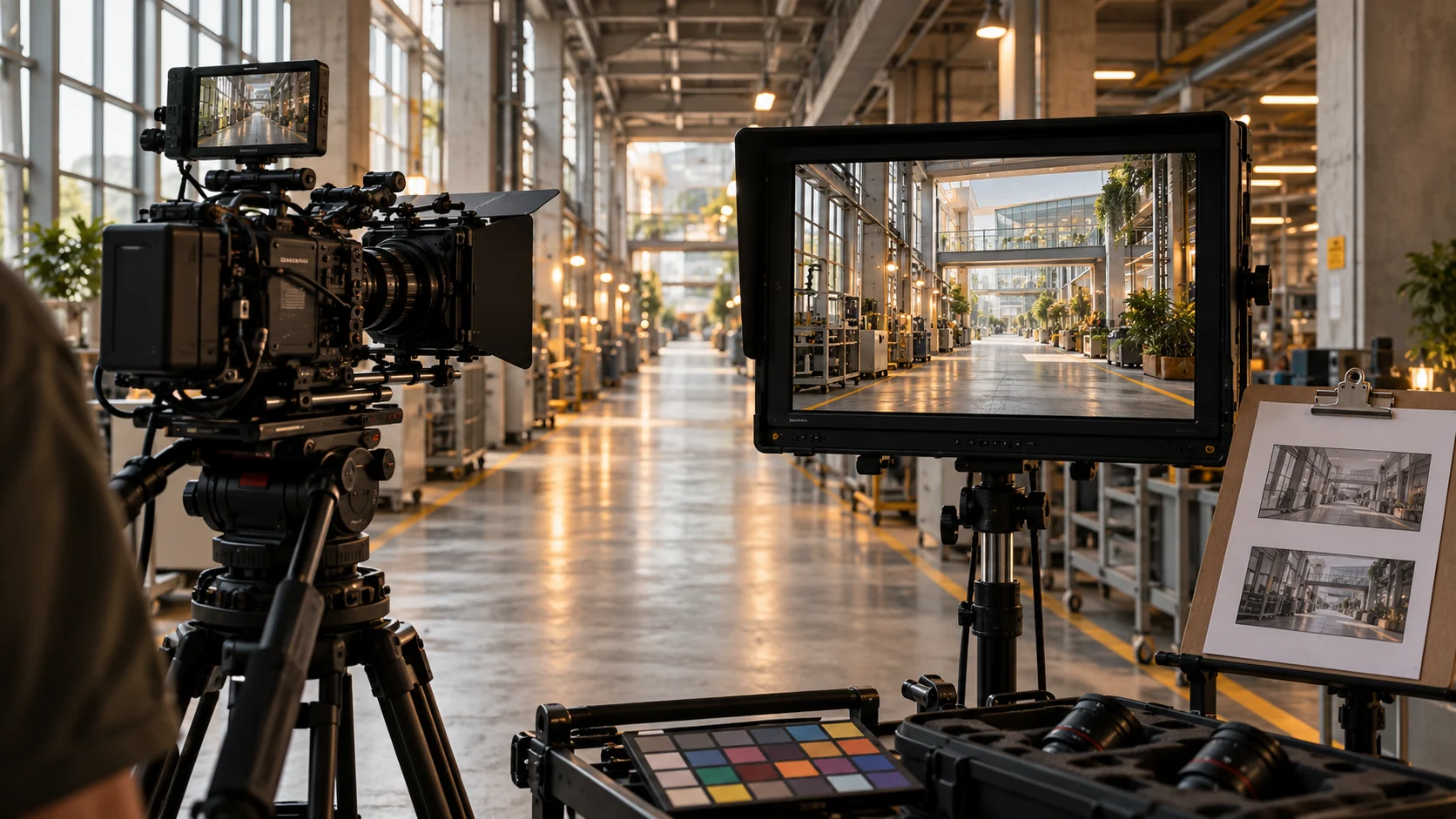
The live-action shoot should collect more than the visible edit. Depending on the plan, the post team may need:
- clean plates without people or products;
- locked-off and moving versions of the same setup;
- lighting references and neutral colour charts;
- product turnarounds and macro details;
- texture and environment references;
- extra handles before and after each action;
- alternate framings for vertical and square delivery;
- room tone and practical sound;
- precise notes on lens, camera height and movement.
These materials make AI extensions and compositing more controllable. They also reduce the need to approximate the real location later.
Protect people and brand identity
If real people appear, decide whether AI will modify their image, extend their performance or create adjacent generated characters. Obtain appropriate consent and document the intended use.
For products and brand assets, identify non-negotiable features before production. Packaging text, geometry, colours and logos may require conventional compositing or 3D even when the environment is generated.
The method should follow the accuracy requirement. Hybrid production is valuable because it can use different techniques inside one coherent result.
Lock stills before motion
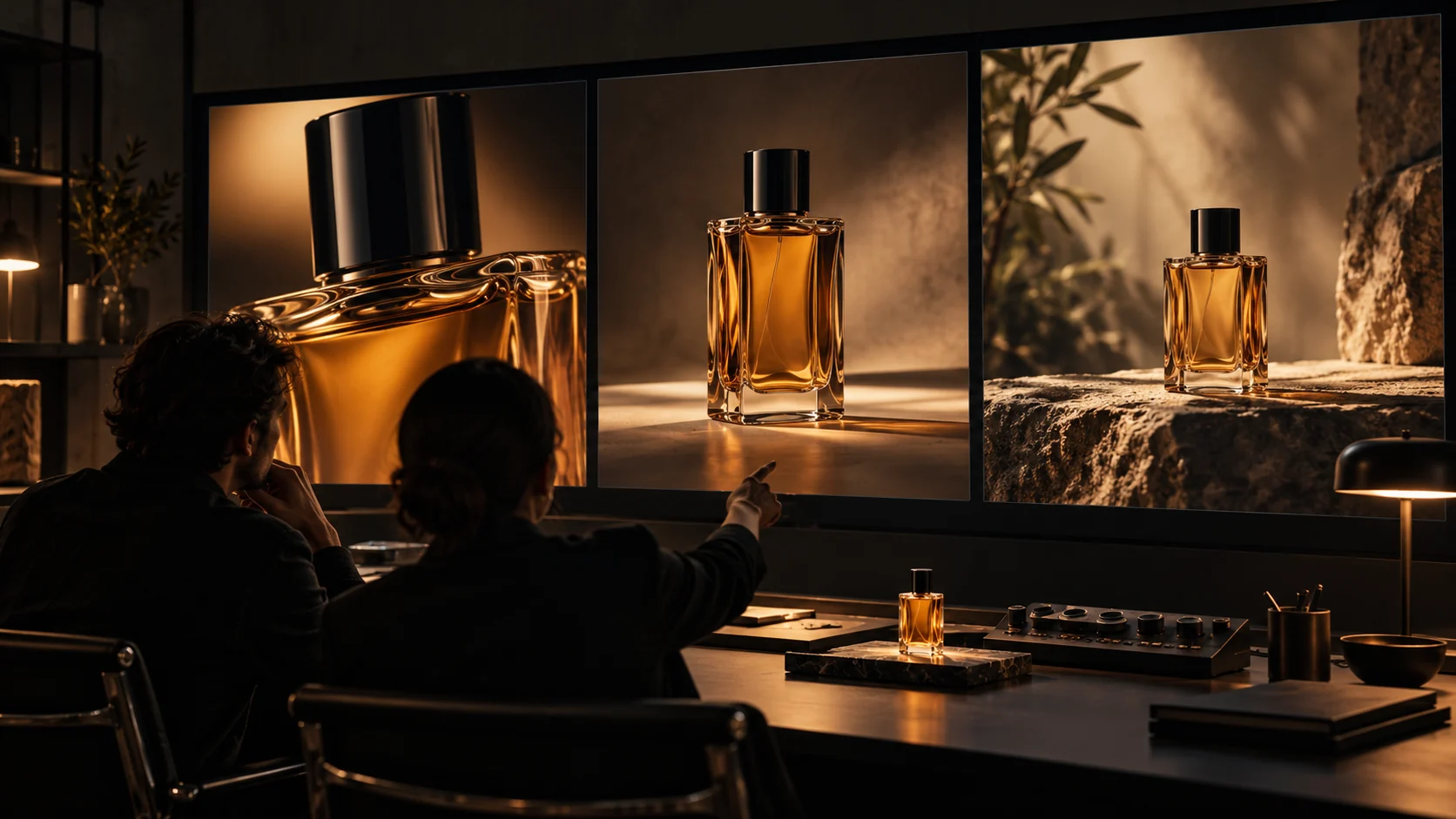
Generated sections should pass through still-frame approval. Build the environment, product treatment, characters and lighting as key frames first.
This gives stakeholders a stable object to review. It also lets the live-action and AI teams compare both worlds before time is spent on animation.
Read Why AI Video Production Should Start With Approved Stills for a detailed explanation of this gate.
Edit earlier than usual
In a conventional production, the edit begins after the shoot. In a hybrid production, an animatic or timing edit should begin before it.
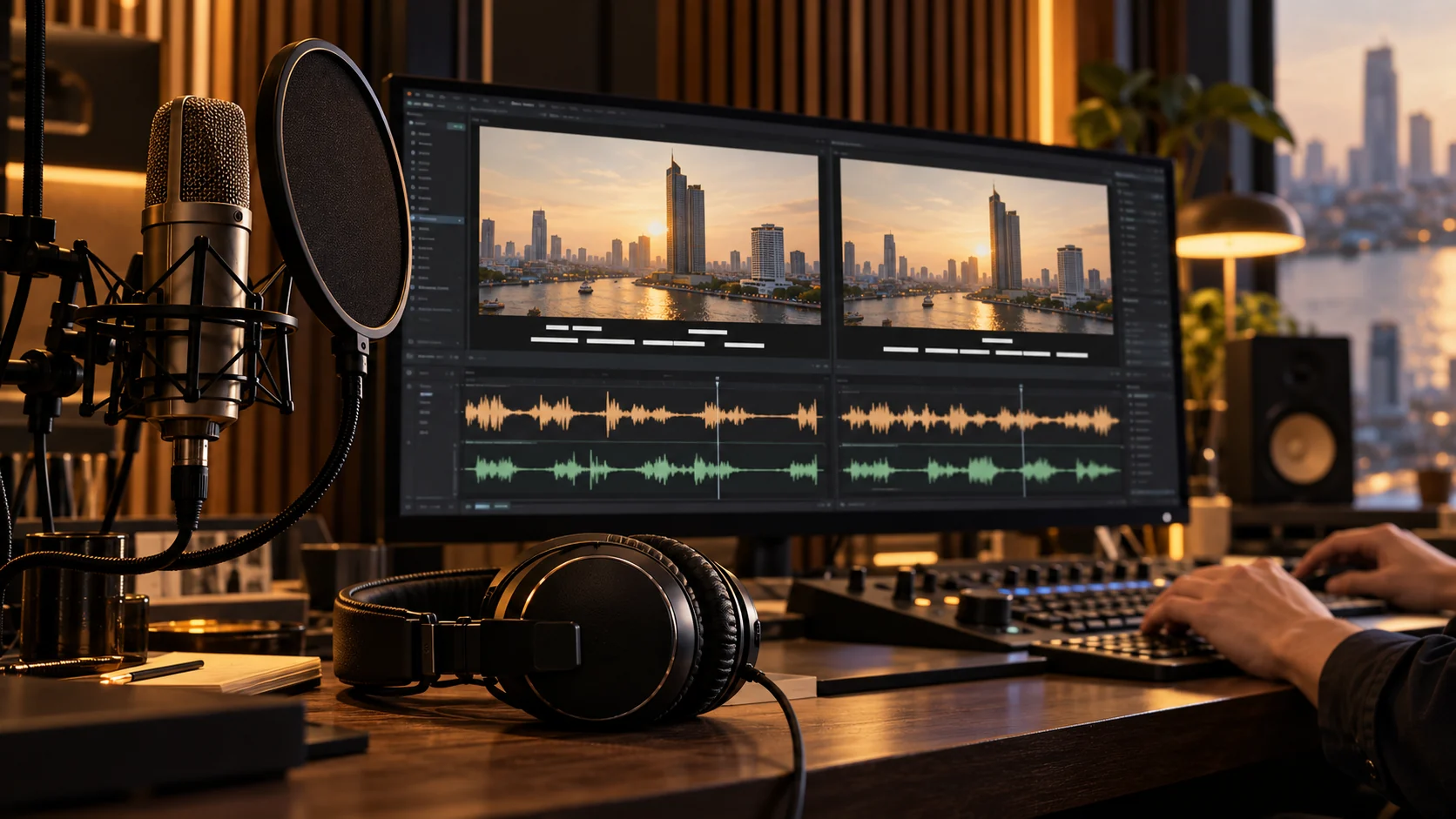
Use boards, rough voiceover, reference clips and test frames to establish duration. This reveals how much live-action coverage is required and how long generated shots must hold.
After filming, update the edit with selected live-action material before generating final motion. Producing AI shots against a changing edit wastes effort.
Plan feedback by discipline
Hybrid films involve more dependencies, so feedback should be structured.
Review factual and performance questions on the live-action material. Review identity, environment and product accuracy on stills. Review movement only after those frames are approved. Review sound, titles and language versions after the picture is stable.
Consolidated feedback matters. A late change to wardrobe, product angle or visual world can affect several generated shots.
Design every delivery format
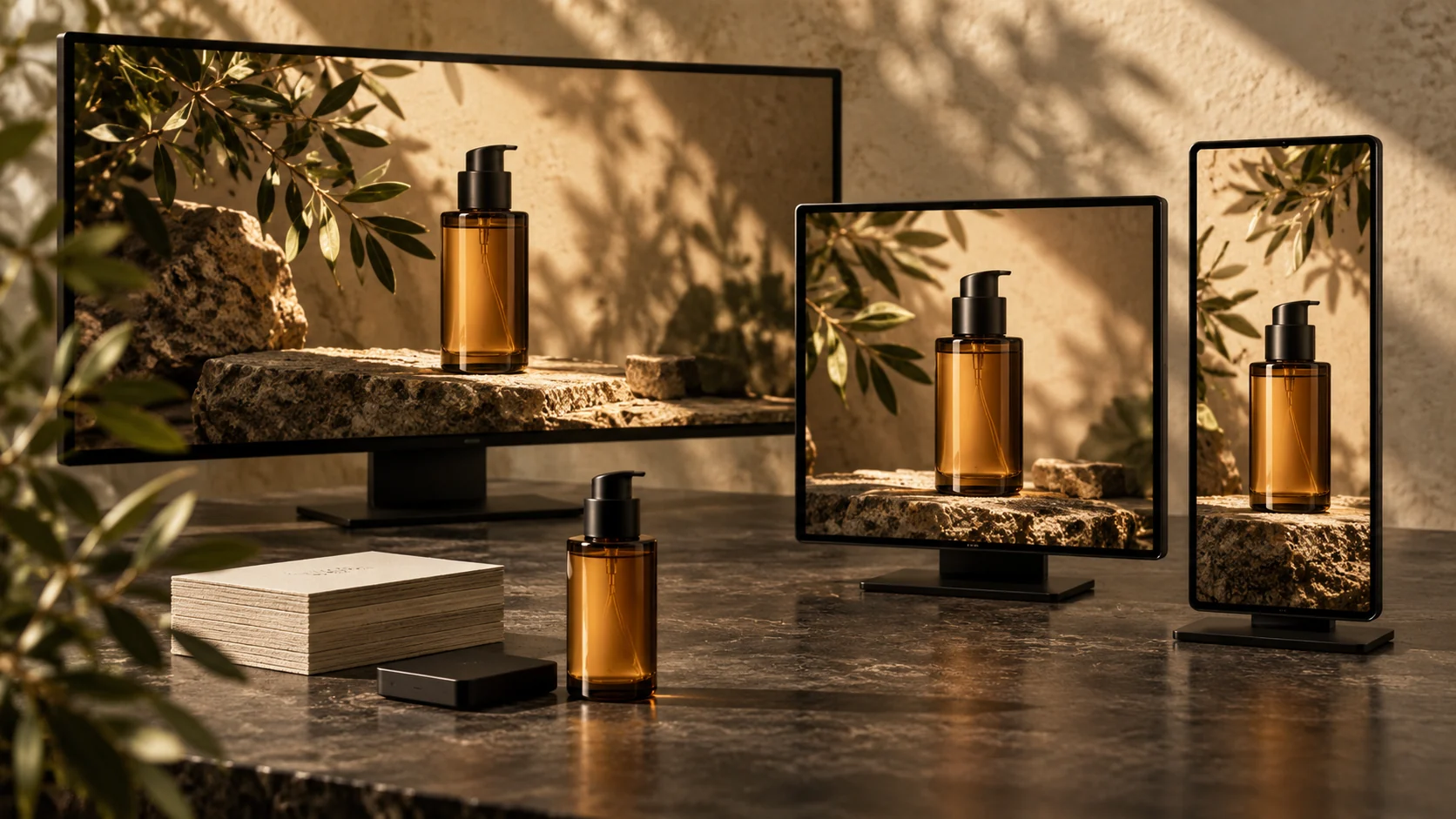
If the film needs 16:9, 9:16 and 1:1 versions, plan safe composition zones during storyboarding and filming. Capture sufficient resolution and alternative coverage. Design generated frames with repositioning room.
Also plan clean masters, captioned versions, subtitle files and still extractions. A hybrid production can create a broad asset family, but only when outputs are part of the brief.
For campaign planning, see How to Turn One AI Film Into a Full Content Series.
A practical hybrid workflow
A controlled plan typically follows this order:
- business objective, audience and evidence;
- live-action versus designed-scene map;
- script, boards and transition design;
- technical tests and approved key frames;
- live-action shoot with post-production reference capture;
- early edit using selected live footage;
- final AI motion and compositing;
- colour, sound, titles, localization and masters.
Hybrid production is not a compromise between old and new methods. It is a way to assign each part of the story to the technique that communicates it most clearly.
See Cinenamon’s production options or share a corporate film brief to map which scenes should be filmed and which should be built.